Amazon has entered the book store market, opening stores in 7 states: California, Illinois, Massachusettes, New Jersey, New York, Oregon, and Washington.
The bookstores are designed to offer the same curated experience as the website, with shelf content determined by online sales and interest. Popular books are shelved with several other books that an interested reader might purchase.
Someone I know visited the bookstore in Columbus Circle, NYC, and said he purchased more books than expected and planned to buy 4 more online.
If you are wondering, MD will be getting a store in Bethesda so you can check it out yourself.
For a list of the locations: https://www.amazon.com/b?node=13270229011
For an interesting article on the stores, check out these articles:
USA Today: https://www.usatoday.com/story/tech/news/2017/05/24/amazon-brings-its-physical-bookstore-new-york/102071054/
NY Magazine: http://nymag.com/selectall/2017/06/why-is-amazon-building-bookstores.html
Monday, December 4, 2017

Thursday, November 30, 2017
ALA Annual Deadline 2018
The deadline to submit your paperwork for the ALA Annual Conference will Be February 9, 2018.
The conference will be in New Orleans, LA from June 21-26, 2918.
The conference will be in New Orleans, LA from June 21-26, 2918.
Tuesday, November 7, 2017
Certification log in page link fixed
I fixed the link for the Certification log in page in the "Interesting Links" box. It now takes you to the mdcert.org page. Thanks Stefanie for letting me know it was broken.
Friday, November 3, 2017
PLA and Computers in Libraries Conference Deadlines
If you want to request funding to attend these conferences, please make a note of the deadlines below. Completed paperwork must be received by SD&T by these dates to receive funding.
PLA application deadline is Friday, December 1
Computers in Libraries application deadline is Friday, February 2
These dates are also on the SD&T calendar.
Thursday, November 2, 2017
Goals and Intentions Statements - Guidelines and Suggestions
If you are going to request funding for a conference or outside learning event, you need to submit the "Request for Authorization for Leave and-or Expenses to Attend" form (354). Along with this form, you must submit a "Goals and Intentions Statement," that explains why you want to attend this event.
Your statement may be brief, but should include the following:
1.) What is the purpose/focus of the conference or training? Who is the intended audience? Put this in your own words and connect it to the library, don’t just copy and paste from the website (1-2 sentences are usually fine).
2.) Why do you wish to attend the event? How is it relevant to your job and/or the library? How will the library benefit from your attendance? What skills/ideas do you expect to gain from attendance that will improve your job performance and/or customer service? (this section should be the longest and contain the most detail). Avoid statements that would be true of any attendee at any conference (e.g. “at this conference I’ll represent the Pratt library”) and focus on why YOU should attend this particular event.
You might include:
- Experiences/information gained from prior years' attendance that you have used in your job. If this is your first time attending you might include information you received from others who attended or what you expect to bring back from the event.
- Specific information/training offered at the event that you cannot receive elsewhere.
- Lists of specific sessions at the event which are relevant to your job, or which prompted your request to attend.
- If committee service is part of your request, you need clearly describe the committee and its goals, and explain how service on this committee benefits the library, the staff, or our customers.
- If you are a member of the sponsoring organization, or have a membership that entitles you to a discount in registration or other fees, include this information and your membership number in your statement.
Remember that the goal of this statement is to give the reasons why you wish to attend the conference and how the library staff or customers will benefit from your attendance. Be specific.
If you have any questions about your statement,
please contact Staff Development and Training before you submit your paperwork.
Tuesday, August 22, 2017
Before, During, After: Learning doesn't begin and end in the classroom.
Many people view learning as a one time event. Go to class, learn something, leave. However, we know that this approach doesn't lead to a high rate of retention. You have to prepare for learning before you enter class, ask the right questions during class, and then review the information after class to get the most out of each learning experience.
Before
Think about what it is you want to "get" from the class. Why did you register for this class - what appealed to you?
Look at the learning objectives and/or course description. What do you expect to learn in this class? Is there an aspect of the topic you don't see in the description/learning objectives that you expected to see? Make a note of it so you can bring it up in class.
What do you expect/want/need to be able to do once you have completed the class? If you don't know what the end result should look like then how can you determine if the class was a success?
What do you already know about this topic? What questions do you have or what else do you want to know about this topic?
During
What material is being covered in this class? What questions do you have? Write them down as they occur to you so that you can ask the instructor. Does anything seem to be missing?
Are you able to understand the material being presented? If not, why not? Do you need the instructor to repeat something or go over the material in a different way? Don't be afraid to ask relevant questions. Do you need more information, details, or examples?
Take notes in class. We forget most of what is covered almost immediately, so a written record of the important ideas can help you remember them. Notes can also be helpful when sharing the information with your supervisor or colleagues.
After
Time to evaluate. Were all of your questions answered? Did you "get" what you wanted from the class or do you need to explore further? Did the trainer share resources that will help you to go further with the topic?
What worked well for you? What problems did you encounter with the information or the instructor?
If asked, could you provide your supervisor or co-workers with a summary of the information presented in class? If you can't, it's a good thing you took those notes in class. Review them to see what points you might want to revisit.
Where do you want to go from here? What other elements of this topic are of interest to you?
Before
Think about what it is you want to "get" from the class. Why did you register for this class - what appealed to you?
Look at the learning objectives and/or course description. What do you expect to learn in this class? Is there an aspect of the topic you don't see in the description/learning objectives that you expected to see? Make a note of it so you can bring it up in class.
What do you expect/want/need to be able to do once you have completed the class? If you don't know what the end result should look like then how can you determine if the class was a success?
What do you already know about this topic? What questions do you have or what else do you want to know about this topic?
During
What material is being covered in this class? What questions do you have? Write them down as they occur to you so that you can ask the instructor. Does anything seem to be missing?
Are you able to understand the material being presented? If not, why not? Do you need the instructor to repeat something or go over the material in a different way? Don't be afraid to ask relevant questions. Do you need more information, details, or examples?
Take notes in class. We forget most of what is covered almost immediately, so a written record of the important ideas can help you remember them. Notes can also be helpful when sharing the information with your supervisor or colleagues.
After
Time to evaluate. Were all of your questions answered? Did you "get" what you wanted from the class or do you need to explore further? Did the trainer share resources that will help you to go further with the topic?
What worked well for you? What problems did you encounter with the information or the instructor?
If asked, could you provide your supervisor or co-workers with a summary of the information presented in class? If you can't, it's a good thing you took those notes in class. Review them to see what points you might want to revisit.
Where do you want to go from here? What other elements of this topic are of interest to you?
Wednesday, August 9, 2017
Study like a Ravenclaw or work to the sounds of a storm at sea
Ambient-mixer.com
Ambient-Mixer.com has a section dedicated to the background sounds of fictional worlds, so you can study to the sounds of the Gryffindor common room, read in Belle’s library, or browse the Internet while you’re being chased by a hoard of Dothraki.
Ambient-Mixer.com has a section dedicated to the background sounds of fictional worlds, so you can study to the sounds of the Gryffindor common room, read in Belle’s library, or browse the Internet while you’re being chased by a hoard of Dothraki.
Friday, August 4, 2017
Library locations
The only thing that you absolutely have to know, is the location of the library.
Albert Einstein
Albert Einstein
Online Learning and CEU Requirements - a new form
For a training to be counted toward your CEU total it has to
be at least 60 minutes long (and counted in 30 minute intervals after
that).
Many of the SkillSoft classes are now less than 60 minutes,
but there is a way to complete these shorter classes and still receive credit.
For SkillSoft Classes that are less than 60 minutes long.
1. Create a new, distinct title for each group of classes that you want to complete. The title must reflects the subject or overall purpose of the programs in the group. For example, several classes on sentences, grammar, and capitalization could be called “Business Writing Essentials.” Other possibilities might be “Gender and Leadership,” “Update Your Customer Service,” “Excel Basics” and so on.
2. Find 2 or more classes on a similar topic that together total an hour or more.
3. Go to the "Forms" page of the blog and select "Learning Log for Online Programs
2. Find 2 or more classes on a similar topic that together total an hour or more.
3. Go to the "Forms" page of the blog and select "Learning Log for Online Programs
4. Enter your general title and purpose of the classes in the space marked "What do I want to learn?" and put the name of the program or provider of the classes in the space marked "Program Used."
5. As you complete the programs, add the names, length, and completion dates to the log. Print your completion certificate for each class and attach the certificates to your log.
6. If
your total is over 60 minutes write down the number of complete hours and look at what
is left. If you have 30 minutes or more
you can claim that extra half hour, but will lose any time less than 30
minutes. For example, a 72 minute total
is worth 1 hour, a 95 minute total is worth 1.5 hours, and a 130 minute total
is worth 2 hours. Put the “total” hours
on the log in the "Contact Hours" space.
7. Sign the bottom of the form and submit the log and certificates to SD&T. The log takes the place of the CEU form in this case.
You need to complete a separate form for each group of
classes, and submit all of the paperwork together to receive credit .
As always if you have any questions, contact the SD&T Coordinator
before you begin.
Wednesday, August 2, 2017
What's that word again?
Can't think of a word? Need a better word?
Wordhippo.com is a website that helps you find synonyms, antonyms, and even sample sentences containing your word. It will help you conjugate your verb, translate a word into English or into a large number of other languages, or even find a word when you only have a phrase that describes it. Give it a try.
Wordhippo.com is a website that helps you find synonyms, antonyms, and even sample sentences containing your word. It will help you conjugate your verb, translate a word into English or into a large number of other languages, or even find a word when you only have a phrase that describes it. Give it a try.
Friday, July 21, 2017
Review: Motivate, Engage, and Energize Your Team
Motivate,
Engage, and Energize Your Team
Che’ Evans,
instructor
Baltimore
City HR Department
July 20,
2017
The instructor, was enthusiastic and brought a great energy
to the discussion. She was happy to answer
specific questions and adapt the course to the needs and interests of the
participants.
The class started by discussed employee motivations and how
to create an environment that encourages employees to be engaged in their
work. Communication is definitely the
key to sharing expectations and clarifying what tasks are “do now” and which
can wait. We also learned that employees
can be working at a satisfactory level, but if they are not supported or even
worse are in the wrong job they will not improve their performance or be
motivated to expand their abilities.
One suggestion offered in class is to meet one-on-one with
each member of your team at least once a month to review progress and discuss
any problems. This doesn’t have to be a
long meeting, and shows the staf that you are interested in their growth. Another interesting ideas was to provide interim
performance evaluations with scores to staff having difficulties so that they
can track their progress from version to version, and review areas that need
improvement.
This was a very interesting class, and I highly recommend it for supervisors and managers. It does seem to be directed toward managers of larger groups, but those with smaller teams will still get some good ideas to try with their staff.
Lisa R. Kenyon
Staff Development and Training
Friday, June 16, 2017
MLA Libraries = Education
I attended a thought-provoking training called
“Libraries=Education: Your Key to Success.” In it, Valerie Gross, President and
CEO of the Howard County Library System, laid out a persuasive case that the
key to libraries remaining relevant in the public eye, and not to mention
well-funded, lies in a thorough rebranding of who we are and of the services we
provide. Her theme is relevant,
particularly in the age of Google and the clamor for fiscal accountability.
When pressed with the question “Libraries – what are they good for?” how do we
answer that concisely and convincingly, before it’s answered for us with the
refrain Absolutely Nothing (apologies to Edwin Starr)?
For
Valerie Gross the solution lies in regarding libraries as an essential component of high-quality public
education, hence the slogan Libraries=Education. Lifelong education is key to survival in the Information Age. The
public, and the politicians they elect, sense this when put in these terms.
Howard County, led by a fiscally conservative county executive, has not only
fully funded but increased funding for their public libraries.
There
are three pillars to the Libraries=Education concept:
I.
Self-Directed
Education through vast collections of items in print, audio and
electronic formats; and thousands of premium online research tools.
II.
Research
Assistance and Instruction for individuals and groups. This
pillar includes classes, seminars and workshops for all ages, taught by library
instructors.
III.
Instructive
and Enlightening Experiences through cultural and
community concepts, events, and partnerships.
Gross advocates
replacing common terms in library world with new ones that reflect the concept
of library as essential educational institution delivering high-quality
education for all. Patron should be
replaced with customer. Programs replaced
with class, seminar, or workshop.
Storytime replaced with Children’s
Class or Year-Round Preschool
Classes. Programming with class
content or curriculum. Reference Desk
with Research Desk and Reference Librarian with Instructor and Research Specialist. Information literacy with Research skills. Gross also believes that less-jargony terms can be
used that the public can relate to; why not call Circulation just Borrowing or
the Circulation Desk the Customer Service Desk? The list goes on,
and for the class Gross compiled 5 pages of common terms with their preferable
substitutes.
We know libraries are
relevant to the public. Do they?
Morgan Stanton
EDM
Tuesday, June 13, 2017
MLA - Two great sessions
I enjoyed my time at
the MLA/DLA in Conference Cambridge, MD. Two sessions stood out to me.
My first workshop was Starting with “Yes, and…”: Improv Fundamentals for Collaboration in
Libraries. This session used physical and verbal
communication to build trust and buy-in with participants as we worked in
groups. Using both forms of communication allowed the team members to practice
taking initiative, working as a team, and working towards their goal through
improvisation. Although some people may use these activities to generate team
building at their libraries the concepts covered can be introduced in a variety
of ways.
The other session was Underserved Communities: Outreach and
Effective Services for Immigrant and ELL Populations. This program was
presented by librarians from Prince George's County Memorial Library System.
The two branches represented have a high immigrant population. Many of the
residents in this area don’t speak English and many of them live in poverty.
The libraries serving this community wanted to have impactful outreach and
services. They partnered with an area church and a Judy Center. The church’s
parishioners are English language learners. A librarian from one branch teaches
a 12 week program that covers multiple topics from how to fill out forms to
using library resources. The library also has a satellite collection at the
church and offers programs to the children of the participants so they can
focus on their class. The Judy Center program is conducted by another branch.
It includes a small satellite library and the library has children’s programs
for the organization’s clients.
To anyone who is
thinking about going to the conference or who has not attended the MLA/ DLA
Conference in a while please consider going next year. This year there were so
many sessions that gave you a real-life glimpse into what is happening in
libraries in Maryland and Delaware. And this year’s site was a really nice
place to be for a couple of days.
Zandra Campbell
ORL
Wednesday, June 7, 2017

Friday, June 2, 2017

Wednesday, May 31, 2017
How do your direct reports see you as a manager?
If you are a managers, would your employees agree with these?
My manager:
- knows how to do my job and what is required on a day-to-day basis.
- is present, engaged, and accessible.
- helps me to see how my job and duties support the library's mission.
- supports my growth and development as an employee.
- helps me understand which parts of my job are the most important.
- understands the challenges of my job.
- offers opportunities for me to expand my duties and try new things.
- provides positive and negative feedback on an ongoing basis to help improve my job performance.
Monday, May 29, 2017
Leadership is a habit
"Leadership is a habit and people have to change
their habits,
good leadership needs repletion and practice"
Nigel Paine
Wednesday, May 24, 2017
False Consensus and Team Building
If you are a manager or a team leader, you need to be aware of the idea of false consesus when working with your team. False consensus is the belief that other people know the same things you know. If you expect that everyone on your team already knows the things that you know, and they don't know these things, then you are setting your team up for failure.
Team leaders also need to be aware of their unconcious biases, especially with regard to similarity. This is the tendency of people to feel more comfortable around those that they see as "similar" to themselves in some way. If we believe that people know the things that we know, then we will see them as similar to us. We will then expect them to believe the things we believe and think the way we think, and behave the way we be behave. These are very dangerous assumptions because they are usually incorrect.
Here are some hints to help avoid false consensus and unconcious biases to ruin your team dynamic:
Team leaders also need to be aware of their unconcious biases, especially with regard to similarity. This is the tendency of people to feel more comfortable around those that they see as "similar" to themselves in some way. If we believe that people know the things that we know, then we will see them as similar to us. We will then expect them to believe the things we believe and think the way we think, and behave the way we be behave. These are very dangerous assumptions because they are usually incorrect.
Here are some hints to help avoid false consensus and unconcious biases to ruin your team dynamic:
- Take the time to learn what your team really knows, so that you can provide them with the information they need to complete their tasks.
- Be aware of your biases so that you don't favor some team members over others, despite their level of achievement and the amount of work they actually complete.(or not)
- Recognize that although you might share some interests with team members it doesn't mean that they are like you in other ways. You have to allow for different work styles and personality types.
- Ensure that every member of your team is performing at an equal level and completing their assigned tasks.
We need to make conscious efforts to work against our unconcious biases, avoid false consesus, and ensure that we are supporting and challenging all members of our teams.
Monday, May 22, 2017
Friday, May 19, 2017

Wednesday, May 17, 2017
Don't shave your wookie - Defibrillator useage and the Empire
This is only a few minutes long, but funny and helpful. The author uses the Star Wars universe and characters to explain how to use an AED.
https://www.ted.com/talks/todd_scott_an_intergalactic_guide_to_using_a_defibrillator?utm_source=tedcomshare&utm_medium=referral&utm_campaign=tedspread
https://www.ted.com/talks/todd_scott_an_intergalactic_guide_to_using_a_defibrillator?utm_source=tedcomshare&utm_medium=referral&utm_campaign=tedspread
Copyright-free stories for gamification, storytimes, and displays
www.gutenberg.org
This is s great site for public domain stories that are not protected by copyright laws because their copyrights have expired. You can use these stories for programs, learning gamification, and even displays. Be careful about images and other versions of the stories though (films, tv programs) which may still be covered.
This is s great site for public domain stories that are not protected by copyright laws because their copyrights have expired. You can use these stories for programs, learning gamification, and even displays. Be careful about images and other versions of the stories though (films, tv programs) which may still be covered.
Thursday, May 11, 2017
Dress Code Basics
If the CEO came in and invited you to a lunch meeting,
could you go as you are?"
Marilyn Feldstein, Job Coach
Monday, May 8, 2017
Friday, May 5, 2017

Thursday, May 4, 2017
Questions Employees Should Ask Their Managers About Their Development
Think about where you would like to be, professionally, in the next few years. Do you have the skills/abilities needed? You should begin to increase your skills now, so that when new opportunities come along you will be ready. An importat step in this process is having regular conversations with your manager. Part of her/his responsibility as managers is to to assist staff members with their professional development. Here are ideas and phrases to get the conversation started:
In the future, I would like to move into (department.position). What are the skills I would need to make this change?
I'd like to strengthen my skills in(area/subject), how can I get more training in these areas?
I think I could learn from (person). Is there a way I could shadow/work with her/him for a time?
I'd like to gain more experience with (topic/technique/skill). What types of trainings are available?
I really enjoy (task) and would like to exapand my responsibilities to include (new task). What skills do I need to take on this new task?
In my current position, I don't have a chance to use my (your ability). Are there other tasks in the department/branch/office that I could do that would let me show my abilities?
I found these classes/webinars in (area). Can I participate in these trainings to strengthen my abilities in (skill)?
You need to be involved in your own development, and see opportunities to improve your skills. You can also contact SD&T with questions about opportunities and classes.
In the future, I would like to move into (department.position). What are the skills I would need to make this change?
I'd like to strengthen my skills in(area/subject), how can I get more training in these areas?
I think I could learn from (person). Is there a way I could shadow/work with her/him for a time?
I'd like to gain more experience with (topic/technique/skill). What types of trainings are available?
I really enjoy (task) and would like to exapand my responsibilities to include (new task). What skills do I need to take on this new task?
In my current position, I don't have a chance to use my (your ability). Are there other tasks in the department/branch/office that I could do that would let me show my abilities?
I found these classes/webinars in (area). Can I participate in these trainings to strengthen my abilities in (skill)?
You need to be involved in your own development, and see opportunities to improve your skills. You can also contact SD&T with questions about opportunities and classes.
Monday, May 1, 2017
Are you good at your job?
"Often, people are good at things they don't really care for."
Sir Ken Robinson
Thursday, April 27, 2017
Questions Managers Should Ask Employees About Their Development
Managers, it is important to have regular conversations with your employees about their development. All staff, not just librarians and LAs, should be working on their skills and abilities. Here are some questions you can use to start these discussions:
What are one or two areas where your abilities/skills could be stronger? How can we improve your performance in these areas?
What new skills would you like to learn? Why did you select these skills? What types of trainings are available for this skill?
What are your strongest skills/abilities? How have you gotten to this point? Could you share your abilities and teach other staff to be stronger in this area?
What new challenges/duties would you like to add to your job? Why are you interested in these?
Are there positions at the library that you find attractive? Can you connect your job to that job directly? If not, what do you need to learn, and what type of experience do you need to add to your resume?
Where would you like to be, professionally, in the next few years? What skills do you need to acquire or improve to meet this goal?
It is important that you and the employee are both invested in his/her development. Help your employees strengthen their skills and increase their productivity.
What are one or two areas where your abilities/skills could be stronger? How can we improve your performance in these areas?
What new skills would you like to learn? Why did you select these skills? What types of trainings are available for this skill?
What are your strongest skills/abilities? How have you gotten to this point? Could you share your abilities and teach other staff to be stronger in this area?
What new challenges/duties would you like to add to your job? Why are you interested in these?
Are there positions at the library that you find attractive? Can you connect your job to that job directly? If not, what do you need to learn, and what type of experience do you need to add to your resume?
Where would you like to be, professionally, in the next few years? What skills do you need to acquire or improve to meet this goal?
It is important that you and the employee are both invested in his/her development. Help your employees strengthen their skills and increase their productivity.
Monday, April 24, 2017
Friday, April 21, 2017

Thursday, April 20, 2017
Are you a horrible supervisor? Take the quiz and find out.
Horrible Supervisor Quiz
How many of these describe you? Be honest, it's just between us.
1. I need to have control over everything. I must know every detail of what my employees are doing.
2. I am indecisive. Wait, no I'm not, Maybe I am.
3. I don't need to know how to do the jobs that are done by my staff, I'm the supervisor.
4. I don't need to make any changes in my behavior or my policies. Any problems that come up must be the fault of my employees.
5. As long as my employees are afraid of me they will do what I want them to do.
6. I don't need a work plan for my staff, we'll just handle things as they come along.
7. Of course I have favorite staff members, they motivate the others to work harder.
8. I don't need to watch my anger around my staff, they should know it's not directed at them.
9. I should get credit for the hard work of my staff, after all I'm their boss.
10. Team-building? That's for superisors who can't control their staff.
11. Recognition? If I haven't told them otherwise they should know they are doing a good job.
12. The most important thing is for my staff to like me.
13. Transparency? The staff only needs to know what I decide to tell them. They should trust that I'm taking care of everything.
14. Providing training and advancement opportunities will only encourage my staff to leave for other departments.
15. If I make a mistake there is no need to explain or apologize. Let's move on.
16. My staff know not to cross me, or I'll make their jobs unbearable in the future.
17. If my employees are unhappy they can just quit.
18, I make a lot of empty promises and never follow through.
19. Autonomy? I can't trust my staff do do things on their own.
20. I don't need any development or training, I know everything I need to know.
How did you do? None of these on their own necessarily makes you a bad manager, but if any of these sound familiar then you probably need some improvement.
Consider taking a class/webinar, reading a professional journal, looking online for resources, or borrowing materials from SD&T to help improve your skills.
Wednesday, April 19, 2017
Do you need to have a meeting? A helpful decision tree.

http://www.tipsographic.com/project-management-should-we-have-this-meeting/
Monday, April 17, 2017
5 Tips for Managing Emotions
If you are having trouble dealing with a situation at work, step back and give your brain time to work on the problem.
Identify the cause of the problem (what is the real issue?)
Take 3 deep
breaths and/or count to 10 (or 20 or 30)
Use your words to
say how you feel (talk through the issues)
Ask for help to
solve the problem
(share the responsibility and get a fresh viewpoint)
(share the responsibility and get a fresh viewpoint)
Take time to calm
down (walk away if necessary)
If you have difficulty with a customer, ask for help from a colleague.
Remember: it is never okay to take out your feelings on others (assistants, friends).
If you have on-going issues, seek help from your manager, HR, or your division chief.
You can also contact EAP for some outside help.
If you have difficulty with a customer, ask for help from a colleague.
Remember: it is never okay to take out your feelings on others (assistants, friends).
If you have on-going issues, seek help from your manager, HR, or your division chief.
You can also contact EAP for some outside help.
What is unconcious bias?
The term unconcious bias refers to a bias of which we are unaware and over which we have no control. It is unintended, subtle, and completely unconcious, and also made by everyone all of the time.
When we educate ourselves about different types biases it is easy to see them in other people, but we don't often see them in ourselves. Our brains see things the way it wants to see them, and we really can't do much about that. Your brain is more active when you speak with someone it sees as being "like you" in some way, equating that person as being "better" than others. The more people "like you" that are around you, the more comfortable you will feel. Again, this is your brain making its own decisions, regardless of the choices we might make consciously.
There are several qualifiers our brain uses when it makes these distinctions, but if we want to try and neutralize our unconcious biases (which is extremely difficult) we can use these qualifiers to identify our biases:

How can we work against our unconcious biases in the workplace? The first step is to acknowledge that we have these biases. It is almost impossible to rid ourselves of them, because our brains do a lot of thinking on their own, but we can create habits and procedures to minimalize the effects of these biases. This can take some effort, because people like it when others conform/perform to our stereotypes and beliefs, and when this is not true our brains have to work harder.
First, we can try to create new "in-groups" that are more diverse and using our similarities to create a positive bias. Anyone with whom you feel similar can become a part of your new group. By making a deliberate effort to expand our "group," our brain finds it easier to make the connections with different types of people.
If possible, create policies and procedures that support this in your workplace. When forming teams, it is important to remember that diverse teams are smarter and more effective. Limit the size of the teams so that everyone can be heard -- 5 to 7 people allows more inclusion than 30. When hiring, it is important to remember that organizations diversity generates more profits. In meetings, the leader of the group can limit the amount of time each person speaks or can ensure that those not in the room, or those who haven't spoken yet get a chance to participate in the discussion. We can't take the biases out of the people, but we can take them out of the processes.
Once we learn to recognize our own biases, we can create procedures, policies, and practices to mitigate their effects.
When we educate ourselves about different types biases it is easy to see them in other people, but we don't often see them in ourselves. Our brains see things the way it wants to see them, and we really can't do much about that. Your brain is more active when you speak with someone it sees as being "like you" in some way, equating that person as being "better" than others. The more people "like you" that are around you, the more comfortable you will feel. Again, this is your brain making its own decisions, regardless of the choices we might make consciously.
There are several qualifiers our brain uses when it makes these distinctions, but if we want to try and neutralize our unconcious biases (which is extremely difficult) we can use these qualifiers to identify our biases:
- Similarity - a person like me is better than person not like me You can use this by focusing on the similarities between you and other people when you interact with them. Find shared traits/goals/characteristics and focus on them. Physical similarities are the easiest and quickest to see, but job, education, political viewpoint, and other factors can be points of similarity. Even something small like a shared favorite television show can make this connection.
- Expedience - easy and quick, it feels right to me We look for evidence to support our impressions and get an answer quickly, but we need to unlearn this because the quick answer is often the wrong answer.. For example, if you tell people that a bat and a ball together cost $1.10, and that the bat is $1 more than the ball, and then you ask them how much the ball costs they will say 10 cents. However, the correct answer is that the bat is 1.05 and the ball is 5 cents. Our brains do the quick division for the answer, but our brains are wrong because they go for the quick answer.
- Experience - my perceptions are accurate so it must be true This assumes that our perceptions are always accurate, but perceptions are highly subjective and therefore suspect. An example of this is customer service. If you have bad service the first time you go into a store then you will expect bad service the next time you go into the same store. Even if you receive good service the second time, you will be more critical and less satisfied because of your previous experience. You may also receive bad service because your attitude will be bad and you may be rude or annoying.
- Distance - closer is better, familiar is better This is one that people have difficulty recognizing, but it can easily be seen in meetings, particularly if some of the participants are attending remotely (either calling in on the phone or by video). The people in the people focus on each other, even if the person speaking is not in the room. Those in the room are taken more seriously and given more time to speak then those on the phone or video. Those attending remotely are often cutoff or not included at the same level, and may be less comfortable speaking up or raising questions of the group.
- Safety - bad is stronger than good This can certainly be seen by watching any news program. The stories included are usually tragic or negative in some way because these stories are seen as more "serious." In the workplace, this creates atmospheres where threats are stronger motivators than rewards.
How can we work against our unconcious biases in the workplace? The first step is to acknowledge that we have these biases. It is almost impossible to rid ourselves of them, because our brains do a lot of thinking on their own, but we can create habits and procedures to minimalize the effects of these biases. This can take some effort, because people like it when others conform/perform to our stereotypes and beliefs, and when this is not true our brains have to work harder.
First, we can try to create new "in-groups" that are more diverse and using our similarities to create a positive bias. Anyone with whom you feel similar can become a part of your new group. By making a deliberate effort to expand our "group," our brain finds it easier to make the connections with different types of people.
If possible, create policies and procedures that support this in your workplace. When forming teams, it is important to remember that diverse teams are smarter and more effective. Limit the size of the teams so that everyone can be heard -- 5 to 7 people allows more inclusion than 30. When hiring, it is important to remember that organizations diversity generates more profits. In meetings, the leader of the group can limit the amount of time each person speaks or can ensure that those not in the room, or those who haven't spoken yet get a chance to participate in the discussion. We can't take the biases out of the people, but we can take them out of the processes.
Once we learn to recognize our own biases, we can create procedures, policies, and practices to mitigate their effects.
Illusion of Knowledge
"The greatest enemy of knowledge is not ignorance,
but the illusion of knowledge."
Stephen Hawking
Thursday, April 13, 2017
Teach a man to fish - the problem with training and proverbs
At a recent conference I attended, one speaker used the well-known
phrase "give a man a fish and you feed him for a day,
teach him to fish and you feed him for a
lifetime." The speaker was using this to illustrate that successful
training is important for all employees, but I found myself thinking about this
for some time, and from a training perspective, this is an extremely flawed
proverb.
Training is not a singular event, but an ongoing process. If we treat training as an isolated event, then we cannot expect a successful result. Each program/class/webinar/book accessed by our employees is one part of a much larger system of development. Let's use the proverb to show how this works.
In our story, did we provide one fishing lesson and then expect the man to be successful, or did we stick with him until we were satisfied with his competency? One single session or class is usually not enough to confirm that the skill has been acquired. Will we be checking back with him in the future? Providing refresher classes or upgrading his skills if needed? It is unlikely that he will continue to be successful without acquiring new skills.
What types of fish were caught during the training sessions? Were they all the same or different? Will the man have access to these types of fish in his daily life or were they only available in the area where he was trained? Can he replicate the training conditions? If not, his chances of success are small. It is easy to be successful in class and give the correct answers, but can you replicate this success on the job or in less than ideal conditions?
What type of tools (technology) were used for the fishing class? Are these tools readily available to the man in the future? Were the tools specific to the type of fish being caught, or were they suitable to a variety of situations? Did he use bait or lures? Does he have the money to purchase these in the future? What happens if his fishing tools are lost or break (obsolete technology)? Can he sustain his success as time passes?
Is follow-up training available to the man? It is one thing to catch a fish, and quite another to clean it and cook it. Does he know which parts of the fish to eat and which to avoid? Was his training thorough, or just a small part of a larger need? If we don't teach him to clean the fish then maybe he'll die from choking on fish bones. Technically this is feeding him for a lifetime, but I don't think that is what the proverb intended. It's easy to say "well he should know these things," but when we are introduced to a new skill or idea we need to avoid making assumptions about what our employees do and don't already know.
Did we teach the man to cook the fish? This is an important part of the process. Technically you can live on raw fish, but then you run the risks of parasites and Salmonella. Does he know different ways to cook the fish, and will he have access to fire and utensils? With training, it is important to consider the next step in the process. Where can participants go for more information? Are there other types of training in different formats? What if they want to take the next step? One training session is unlikely to contain all the information the participants need, so what is next?
Did we teach the man in our story to cook other things to go with the fish? He'll need some vegetables and fruit to maintain a healthy diet and limit his intake of mercury. Likewise, our trainees need to know how the training fits into their overall skill set or abilities. What educational need is being satisfied by the training? Are there other skills that can be connected to those covered in this training? Where does it fit into the abilities needed by the employee?
Finally, and perhaps this should be first, what if the man in the story doesn't want to be a fisherman? Maybe he doesn't even like fish. Maybe he doesn't want a physical job outdoors in all weathers. Maybe he has a physical condition that would prevent him from doing the job. Maybe he had neither the disposition nor the basic abilities needed to be a successful fisherman. Not every person can do every job, regardless of the amount of training s/he receives, so is there a backup plan for our fisherman?
Does he have a retirement plan? Is there a plan to care for him in his old age? What happens when he gets too old to physically do the job? What happens if the fish population declines and he can't catch enough to feed himself? Is there a plan to teach him a different skill set if needed? It is important to keep improving skills throughout your career and planning for changes in your industry.
What happens if he gets tired of fishing, assuming he ever wanted to do it at all? Once starvation is no longer a threat, he may become dissatisfied with his life as a fisherman and his performance will suffer. People lose interest in their jobs if they are not given the chance to grow and improve themselves. Will we be providing training in the future on new fishing techniques and equipment, or will he be obsolete in 5 years’ time?
So perhaps the proverb should be "give a man a fish and you feed him for a day, teach him to catch and cook fish, grow and prepare vegetables and fruits, give him upgraded fishing lessons as needed, and plan for alternate training in the case of obsolescence, and you feed him for a lifetime." Not as catchy, but certainly a more successful training plan.
Monday, April 10, 2017
The importance of planning
Remember to look at your plan from all angles. Not every idea is a good idea.

https://twitter.com/PeggytheShark/status/851244076351533056/photo/1
https://twitter.com/PeggytheShark/status/851244076351533056/photo/1
A helpful blog for leadership skill development
I found this site, which has a lot of useful information, particularly about leadership skills. It is very "business"oriented, but the leadership section has a lot of useful informaiton.
https://thoughtleadershipzen.blogspot.com/search/label/Leadership
Here is their description from the "about us" page:
Welcome to The Thought Leadership Zen blog, it is a FREE comprehensive site dedicated to help you keep you updated with the current trends in Management and excel in business and life. On this site we are going to share with you some tips, ideas, strategies and suggestions on how to get the best out of business, Work and personal life. We will also aim to keep you'll updated about the best practices in the world of management and self development around the world.
Friday, April 7, 2017
Do you have "engaged" employees?
Engaged Employees:
take initiative -- advocate for the organization -- interacts with other staff -- motivates others -- concentrates on their tasks -- produces a high quality of work -- loves what they do -- collaborates
Disengaged Employees:
does bare minimum of work -- wouldn't recommend the company to others -- avoids other staff -- complains a lot -- loses focus easily (or doesn't have it in the first place) -- is fine with "good enough" level of work -- always looking for another job -- avoids team participation
70% of U.S. employees are disengaged - are your staff members among them?
Friday, March 17, 2017

Friday, March 10, 2017


Friday, March 3, 2017

Friday, February 24, 2017

Copies, Copies, Copies
Just a friendly reminder, that you should keep copies of all paperwork you send to SD&T, especially conference requests. These all go through several offices before they come to us, and somethings things get lost along the way. If you need to recreate any paperwork it's easier to start from a copy then from nothing.
Wednesday, February 22, 2017
CEU forms from non-library programs
We received some questions lately about getting CEU forms for programs offered by other organizations. If you attend programs offered by SD&T, SLRC, MLA, or other Maryland libraries, you can expect to receive a completed CEU form at the end of the program.
Any other programs, including those from ALA or OCLC, will not provide ready-made forms for attendees. Not all library systems require certification supported by continuing education, so they don't provide these types of forms for their programs.
If you attend a program/webinar that is approved by SD&T where a CEU form is not provided then you will have to create your own. The blank form is available on the Vine, and you will need to completed the form, including the program description and learning goals.
When you submit the form, be sure to include a copy of your completion certificate, "thank you for participating" email, or other proof that you completed the program so that the SD&T coordinator can approve your hours.
Any forms submitted for programs which do not meet the minimum requirments for continuing education credit will not be added to your file. It is best to check with SD&T for approval of CEU hours before participating in a program.
If you have any questions about this issue, please contact SD&T.
Any other programs, including those from ALA or OCLC, will not provide ready-made forms for attendees. Not all library systems require certification supported by continuing education, so they don't provide these types of forms for their programs.
If you attend a program/webinar that is approved by SD&T where a CEU form is not provided then you will have to create your own. The blank form is available on the Vine, and you will need to completed the form, including the program description and learning goals.
When you submit the form, be sure to include a copy of your completion certificate, "thank you for participating" email, or other proof that you completed the program so that the SD&T coordinator can approve your hours.
Any forms submitted for programs which do not meet the minimum requirments for continuing education credit will not be added to your file. It is best to check with SD&T for approval of CEU hours before participating in a program.
If you have any questions about this issue, please contact SD&T.
Friday, February 17, 2017

Friday, February 10, 2017
Friday, February 3, 2017

Friday, January 27, 2017
Do you have a book, I think it's green?

https://media.bookbub.com/blog/2016/02/17/reasons-we-love-librarians/
Tuesday, January 24, 2017
Spice Up a Program with a Dash of Literacy
Spice Up a Program with a Dash of Literacy
Sep 6, 2016
Ms. Czarnecki presented 5 specific forms of literacy that
can be relatively easily incorporated into programming for tweens and
teens:
·
Critical—critical thinking skills
·
Cultural—multicultural, multiethnic, etc.
·
Digital—the use of digital devices as well as
social media, the internet, etc.),
·
Information—identify, locate, evaluate and
effectively use information
·
Print literacy—following print instructions such
as a recipe
and
·
Multiple literacies—incorporation of more than
one literacy into a program.
She clarified that there certainly more literacies than
she enumerated but did not list them.
These 5 are certainly wide-ranging and allow for a great deal of
innovation and interaction.
Many of her examples were quite involved in time,
planning and execution (Turn It Up Teen
Radio, SCRATCH (a game-maker tool from MIT at https://scratch.mit.edu/ ), QR
Code Scavenger Hunt, Kitchen Chemistry, Cotton Club-esque talent show, etc.
However, we at RLN have some experience with interactive
bulletin boards and scavenger hunts – both part of her “self-directed”
programming. Below is a photo of the bulletin board we put up at RLN for Black History Month that shows the influence of this webinar. Jay pulled articles and headlines from the online database for The Baltimore Afro-American and created an appealing bulletin board that includes instructions on how to access the databases.
Julie Johnson
Roland Park Branch

You can view the webinar at : https://www.youtube.com/watch?v=ceGcnPWhbTo
Friday, January 20, 2017
Branch Managers
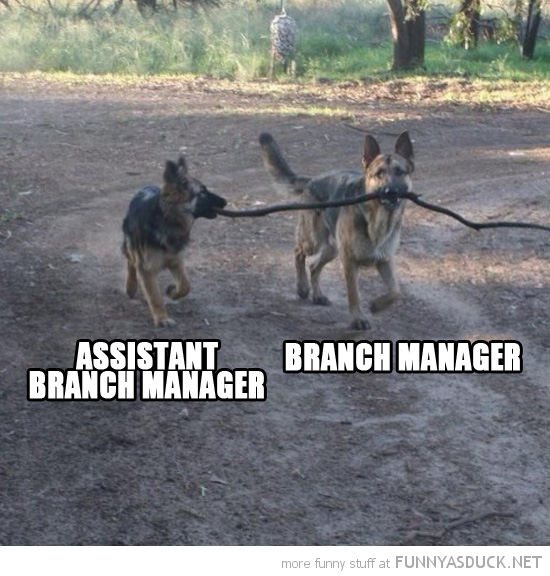
http://funnyasduck.net/post/16011/funny-dogs-holding-stick-assistant-branch-manager-pics
Tuesday, January 3, 2017

Subscribe to:
Posts (Atom)