We received some questions lately about getting CEU forms for programs offered by other organizations. If you attend programs offered by SD&T, SLRC, MLA, or other Maryland libraries, you can expect to receive a completed CEU form at the end of the program.
Any other programs, including those from ALA or OCLC, will not provide ready-made forms for attendees. Not all library systems require certification supported by continuing education, so they don't provide these types of forms for their programs.
If you attend a program/webinar that is approved by SD&T where a CEU form is not provided then you will have to create your own. The blank form is available on the Vine, and you will need to completed the form, including the program description and learning goals.
When you submit the form, be sure to include a copy of your completion certificate, "thank you for participating" email, or other proof that you completed the program so that the SD&T coordinator can approve your hours.
Any forms submitted for programs which do not meet the minimum requirments for continuing education credit will not be added to your file. It is best to check with SD&T for approval of CEU hours before participating in a program.
If you have any questions about this issue, please contact SD&T.
Wednesday, February 22, 2017

Friday, February 17, 2017

Friday, February 10, 2017
Friday, February 3, 2017

Friday, January 27, 2017
Do you have a book, I think it's green?

https://media.bookbub.com/blog/2016/02/17/reasons-we-love-librarians/
Tuesday, January 24, 2017
Spice Up a Program with a Dash of Literacy
Spice Up a Program with a Dash of Literacy
Sep 6, 2016
Ms. Czarnecki presented 5 specific forms of literacy that
can be relatively easily incorporated into programming for tweens and
teens:
·
Critical—critical thinking skills
·
Cultural—multicultural, multiethnic, etc.
·
Digital—the use of digital devices as well as
social media, the internet, etc.),
·
Information—identify, locate, evaluate and
effectively use information
·
Print literacy—following print instructions such
as a recipe
and
·
Multiple literacies—incorporation of more than
one literacy into a program.
She clarified that there certainly more literacies than
she enumerated but did not list them.
These 5 are certainly wide-ranging and allow for a great deal of
innovation and interaction.
Many of her examples were quite involved in time,
planning and execution (Turn It Up Teen
Radio, SCRATCH (a game-maker tool from MIT at https://scratch.mit.edu/ ), QR
Code Scavenger Hunt, Kitchen Chemistry, Cotton Club-esque talent show, etc.
However, we at RLN have some experience with interactive
bulletin boards and scavenger hunts – both part of her “self-directed”
programming. Below is a photo of the bulletin board we put up at RLN for Black History Month that shows the influence of this webinar. Jay pulled articles and headlines from the online database for The Baltimore Afro-American and created an appealing bulletin board that includes instructions on how to access the databases.
Julie Johnson
Roland Park Branch

You can view the webinar at : https://www.youtube.com/watch?v=ceGcnPWhbTo
Friday, January 20, 2017
Branch Managers
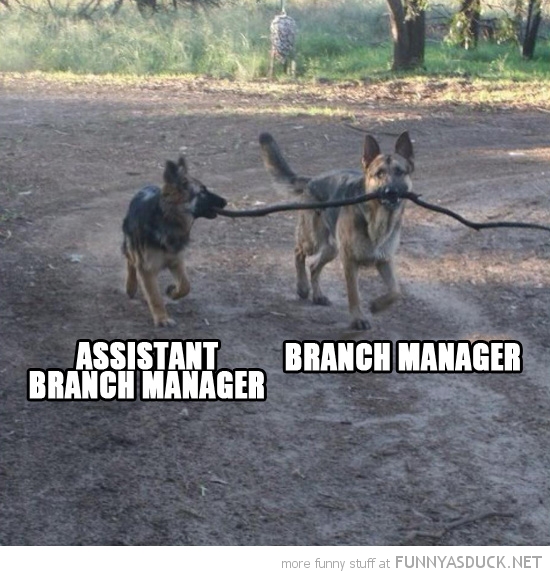
http://funnyasduck.net/post/16011/funny-dogs-holding-stick-assistant-branch-manager-pics
Subscribe to:
Posts (Atom)