WELCOME TO THE STAFF DEVELOPMENT AND TRAINING OFFICE HOMEPAGE.

This learning page is a great place to find information about training, learning portfolios, and get helpful tips on customer service, managing employees, or other library issues. We'll also be posting post-conference reflections and ideas discovered by staff members at programs they attended.

Subscribe to the blog to get updates when ideas are posted.

Tuesday, January 24, 2017

Spice Up a Program with a Dash of Literacy

Spice Up a Program with a Dash of Literacy
YALSA Webinar presented by Kelly Czarnecki of Charlotte, NC
 Sep 6, 2016


Ms. Czarnecki presented 5 specific forms of literacy that can be relatively easily incorporated into programming for tweens and teens: 

·         Critical—critical thinking skills
·         Cultural—multicultural, multiethnic, etc.
·         Digital—the use of digital devices as well as social media, the internet, etc.),
·         Information—identify, locate, evaluate and effectively use information
·         Print literacy—following print instructions such as a recipe
and
·         Multiple literacies—incorporation of more than one literacy into a program.

She clarified that there certainly more literacies than she enumerated but did not list them.  These 5 are certainly wide-ranging and allow for a great deal of innovation and interaction.

Many of her examples were quite involved in time, planning and execution (Turn It Up  Teen Radio, SCRATCH (a game-maker tool from MIT at https://scratch.mit.edu/ ), QR Code Scavenger Hunt, Kitchen Chemistry, Cotton Club-esque talent show, etc.


However, we at RLN have some experience with interactive bulletin boards and scavenger hunts – both part of her “self-directed” programming.  Below is a photo of the bulletin board we put up at RLN for Black History Month that shows the influence of this webinar.  Jay pulled articles and headlines from the online database for The Baltimore Afro-American and created an appealing bulletin board that includes instructions on how to access the databases. 

After discussing the ideas with Stefanie Thomas, the children’s librarian, we think we may be able to incorporate some of the literacies into activity sheets (scavenger hunts, bulletin board displays, maker space programs, etc.) that we hope to tie into this summer’s SRP themes and use during the SRP.  

Julie Johnson
Roland Park Branch


You can view the webinar at :  https://www.youtube.com/watch?v=ceGcnPWhbTo

Friday, January 20, 2017

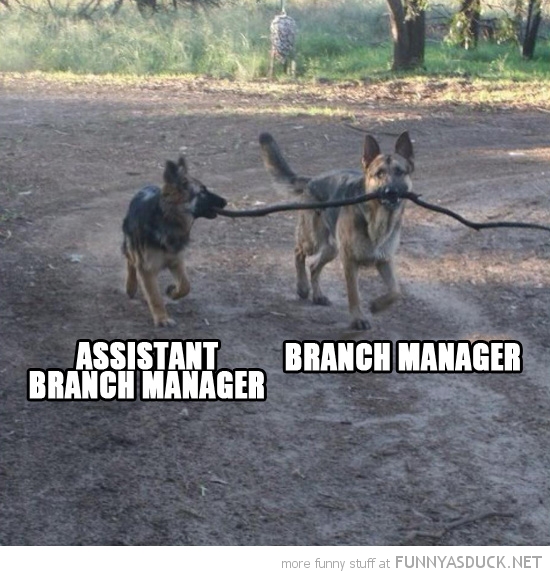
Branch Managers


http://funnyasduck.net/post/16011/funny-dogs-holding-stick-assistant-branch-manager-pics

Thursday, December 29, 2016

Have you joined the Maryland Library List Serv?

Maryland's electronic discussion list for librarians
MARYLIB is an electronic discussion group intended to provide Maryland area librarians with a fast, convenient way to interact on problems and opportunities of local interest. Keep up with ALA/MLA events. Share job openings with colleagues. Offer weeded items from your collection to others. Ask a question. Hear about new issues of The CRAB first!
This list is open to all who are employed by a library such as librarians, library associates, paraprofessionals, circulation and support staff. It is also open to library school students, library volunteers and trustees.
Subjects for this list should be related to Librarianship in general and to the Maryland area in particular. Requests for assistance, offers of material, and legitimate library job postings are all fair game. This is a professional forum. Persistently sending off-topic posts and violations of common courtesy may result in removal from the list.
To subscribe to the list:
1.     Send a message to sympa@lists.umaryland.edu from the address you want to subscribe to the list.
2.     In the subject line of your message, type in: subscribe marylib Firstname Lastname (indicate your own first and last name).
3.     Leave the message body blank.
4.     When your request is accepted, the message you receive confirms your subscription to the list.

To post a message to the list:

Address your message to marylib@lists.umaryland.edu.
REMEMBER that when you reply to a message sent through the listserv, your message will go to EVERYONE on the listserv. To reply privately, you must send a separate message addressed to the original sender. Therefore, it's a good idea to include your e-mail address in the body of any message you post to the list. In some systems, the reader won't be able to see the address in the sender line.
Did you once receive MARYLIB mail, but are no longer getting messages? Please subscribe again from your current email address.
Questions?
 Contact: Brian Oberle (Anne Arundel County Public Libraries), boberle@aacpl.net; Audrey Schadt (Salisbury University), ahschadt@salisbury.edu; or Tim Van Fleet (Anne Arundel County Public Library), tvanfleet@aacpl.net .

Learn more about MLA on their website www.mdlib.org

Wednesday, December 28, 2016

ALA and MLA annual conferences 2017 - EPFL deadlines for funding requests

Here are the deadlines for applying to the MLA or ALA annual conferences.

If you are interested in attending the MLA/DLA conference from May 10 - 12, 2017 at the Hyatt-Chesapeake in Cambridge, MD, your completed paperwork must in the SD&T office by Friday, February 3, 2017.

If you wish to attend the ALA annual conference from June 22-27, 2017 in Chicago, IL, your completed paperwork must in the SD&T office by Friday, February 10, 2017.

All paperwork must be original, signed, and complete to be considered "on time," and on the SD&T Coordinator's desk by the end of the day on the date listed above.  Any late or incomplete paperwork will receive limited or no funding for the event.

Registration and other information is not yet available for these conferences, but we wanted to put the deadlines out now.  We will provide reminders and further information as the information becomes available.

Wednesday, November 9, 2016

Learning 2016 - some misc. thoughts and facts

Learning 2016
Orlando, FL
October 23-26

The Learning conferences are designed for training and learning professionals, and focuses on issues surrounding workplace learning.  This was the 26th year of the conference, and there were 207 breakout sessions offered, as well as 6 general sessions.  Attending the conference were 1639 learning professionals who support over 30 million employees worldwide.  Maryland Libraries sent 9 staff to the conference from 7 different systems.

The themes for this year were innovation, storytelling, and the panorama of learning. 

Here are some interesting and random ideas from the conference:

  • People need power skills – deep thinking, advanced communication, and problem solving
  • Leadership is a habit and people have to change their habits, this requires repletion and practice
  • Multi-tasking is a myth, we cannot do more than one thing at a time
  • 20% of the U.S. workforce lack HS Diploma = 40 million people
  • Job rotations provide stretch assignments and cross-functional learning opportunities
  • Our brains are wired to love pictures, 50% of your brain is involved in visual processing and interpretation, images process 60x faster than anything else in our brain
  • In space, they use Greenwich Mean time

One final thought:  the average attention span of humans is 8 seconds, and goldfish have a 9 second attention span.

Lisa Kenyon
Staff Development and Training

Monday, October 31, 2016

Core 4 -- A Conference in the Crescent City

Beignets, beads, Bourbon Street debauchery, and...breakthrough learning.  Ok, so I didn’t actually feel the need to hit up Bourbon St., having done that in my more tender undergraduate years, and sadly, I didn’t make it to Cafe du Monde to partake of their famous flaky french doughnuts, but I did learn about breakthrough learning techniques and other concepts related to instructional design and training facilitation during the 2 1/2 days I spent at the ATD Core 4 Conference in New Orleans, LA.   
    
The conference is designed for HR professionals, curriculum designers, corporate trainers, nonprofit facilitators, teachers -- really anyone who has anything to do with professional development in any type of organization.  As a SLRC Librarian I deliver a variety of face-to-face and virtual trainings, and I attended ATD with the goal of absorbing new ideas.

So, what did I learn?

  • It takes A LOT of time simply to design effective training.  According to research by Brian Chapman,  it takes anywhere between 22 and 82 hours to create 1 hour of instructor-led classroom learning.  Developing 1 hour of basic e-learning from scratch takes an average of 49 hours.    

  • Avoiding “death by powerpoint” is a must, and visual design play a huge role.    Playing with font styles, shapes, and types of imagery creates appealing slides, and as Connie Malamed pointed out in her session on “Crash Course on Visual Design,” aesthetic appeal actually leads to greater learning.

  • Learning styles are a big lie.  Ok, not totally but several presenters referred to recent research that suggests it’s less important to focus on individual learning styles and more meaningful to provide variety in your training because most people learn best by using a combination of visual, auditory, and kinesthetic techniques.  While we’re on the topic of theory, having a grasp of adult learning theory is super important.  When designing training,  adults often want to know WIIFM (What’s In It For Me), or how this is going to immediately and practically impact them.  Also, they often appreciate opportunities to share their life experiences during learning events as well as relate newly acquired knowledge and skills to previous knowledge.    

  • Action mapping is a useful instructional design strategy that helps  trainers avoid the all too common “information dump” presentation.  The 4 step method involves 1.) identifying the goal, 2.) identifying what actions (not necessarily knowledge) people need to do to accomplish the goal,  3.) designing practice activities, and 4.) identifying the minimum information people need to complete each activity.   Maybe it’s not totally practical in all library learning contexts but if you’re like me, you’ll try anything to keep your participants from snapchatting and playing Angry Birds during your trainings.   

  • Games are a great learning tool to integrate into training and instruction.  No, wait games are distracting and bad. Ok, so both things can be true.   Games are ok if they facilitate successful learning outcomes (I played a friendly competitive game of Jeopardy to find out how much technical lingo I already knew about e-learning), but don’t throw them in with no strategy and call it “engagement.”  Then it just becomes what presenter termed “clicky clicky bling bling,” just for looks.      

  • The New World Kirkpatrick Model  used for training evaluation is super useful and super hard to implement.   Measuring level 1 (learners’ reaction to training) and level 2 (if and how much learners’ actually learn during training) is totally doable, but it becomes much harder when we try and measure how training changes behavior (Level 3) and how it influences outcomes (Level 4). Oh,  the ever present challenge of assessment.   No magic answers here, but some good food for thought.  

Speaking of food,  I did sneak out of the hotel one day between sessions to enjoy a classic muffaletta from the world-famous Central Grocery and a view of the muddy Mississippi.   It was yet another breakthrough learning experience, I promise.  

Emily Sachs
Information Services

NOLA conference photo.jpg